A book which truly exalts Christ and sets the heart aflame for Him! In this popularly written three-part book, Dr. Philip Schaff first sets forth the human perfection and character of Christ in such a way as brings the honest reader to worship Him as God incarnate; then shows the emptiness of any and all alternative explanations for His person; and finally presents a collection of writings by unbelievers concerning the moral perfection of Jesus in order to demonstrate the universal belief in the perfection of Christ. In light of Schaff's total argument it becomes quite clear that men ought to give up their strange and empty theories about Christ in order to bow before Him and give Him the honor He deserves. This book is very well-written, whether your concern is careful scholarship, beautiful writing, or worshipful attitude. Furthermore, nearly every kind of person can benefit from reading it. Unbelievers will have a difficult time shaking off the forcefulness of Schaff's argument, and so it's perfect to give to non-Christians who are interested in Christ and somewhat intellectually inclined. There are some liberal christian groups who profess Christ but are, perhaps, skeptical of His deity or miraculous deeds. This book should help to correct anyone who holds to this view. And Christians themselves can read it to see more of the glory of their Lord, both in His own person and in His unparalleled impact on the world. And so we recommend this book very highly!
Person of Christ - The Perfection of His Humanity Viewed as a Proof of His Divinity
Philip Schaff
Edições (1)
Ver mais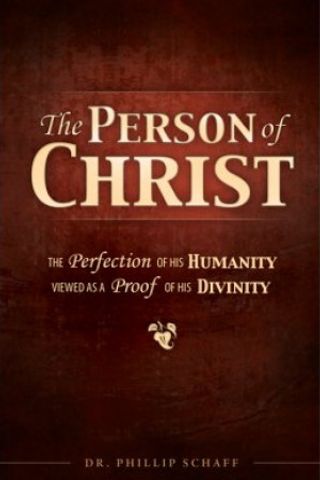
Estatísticas
Avaliações
0 / 0- 5 estrelas0%
- 4 estrelas0%
- 3 estrelas0%
- 2 estrelas0%
- 1 estrelas0%

Philip Schaff
Philip Schaff (Chur, 1 de janeiro de 1819 - 20 de outubro de 1893), foi um teólogo protestante e historiador da igreja cristã. Nascido na Suíça, Schaff completou seus estudos no ginásio de Stuttgart e nas universidades de Tübingen, Halle e Berlim, na Alemanha, tendo depois se mudado para os Estados Unidos, onde lecionou. Um evento que moldou sua piedade ao longo de sua vida foi um avivamento que ele experimentou aos 15 anos de idade na Congregação dos Irmãos Evangélicos em Korntal.[1] Nas escolas alemãs, foi sucessivamente influenciado por Baur e Schmid, por Augusto Tholuck (1799.1877) e Julius Müller, por David Friedrich Strauss e, principalmente, por Neander. Em seguida, viajou através da Itália e Sicília como tutor do Barão Krischer. Em 1842, ele foi Privatdozent na Universidade de Berlim, e em 1843, foi chamado para se tornar professor de história eclesiástica e literatura bíblica no Seminário Teológico da Reforma Alemã, em Mercersburg, Pensilvânia, o único seminário daquela igreja nos Estados Unidos.