Entrar
    Book cover
    Compartilhar
    Editar
    • Sinopse
    • Edições1
    • Vídeos0
    • Grupos0
    • Resenhas1
    • Leitores12
    • Similares2
    Skoob logo

    Saiba mais

    Quem somosTermos de usoFale conoscoCentral de ajudaPrivacidade

    Fique por dentro

    Livros em destaque

    Explore

    LivrosAutoresEditorasLeitoresCortesias

    Siga nas redes sociais

    Baixe o app

    Google PlayApp Store

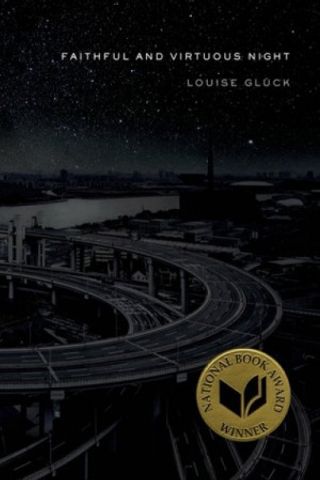
    Faithful and Virtuous Night -

    Louise Glück

    Farrar, Straus and Giroux
    2014
    80 páginas
    2h 40m
    ISBN-13: 9780374152017
    3.7
    11 avaliações
    Leram1Lendo0Querem11Relendo0Abandonos0Resenhas1
    Favoritos2Desejados11Avaliaram11

    Winner of the 2014 National Book Award for Poetry Louise Glück is one of the finest American poets at work today. Her Poems 1962-2012 was hailed as "a major event in this country's literature" in the pages of The New York Times. Every new collection is at once a deepening and a revelation. Faithful and Virtuous Night is no exception. You enter the world of this spellbinding book through one of its many dreamlike portals, and each time you enter it's the same place but it has been arranged differently. You were a woman. You were a man. This is a story of adventure, an encounter with the unknown, a knight's undaunted journey into the kingdom of death; this is a story of the world you've always known, that first primer where "on page three a dog appeared, on page five a ball" and every familiar facet has been made to shimmer like the contours of a dream, "the dog float[ing] into the sky to join the ball." Faithful and Virtuous Night tells a single story but the parts are mutable, the great sweep of its narrative mysterious and fateful, heartbreaking and charged with wonder.

    Edições (1)

    Ver mais
    • book cover

    Similares (2)

    Ver mais
    • book cover
    • book cover
    Resenhas (1)Ver mais
    @psi.adriana.scarpin picture
    @psi.adriana.scarpin21/10/2020Resenhou um livro
    4 (Muito bom)

    The Sword in the Stone

    "My analyst looked up briefly. Naturally I couldn't see him but I had learned, in our years together, to intuit these movements. As usual, he refused to acknowledge whether or not I was right. My ingenuity versus his evasiveness: our little game. At such moments, I felt the analysis was flourishing: it seemed to bring out in me a sly vivaciousness I was inclined to repress. My analyst's indifference to my performances was now immensely soothing. An intimacy had grown between us like a forest around a castle. The blinds were closed. Vacillating bars of light advanced across the carpeting. Through a small strip above the window sill, I saw the outside world. All this time I had the giddy sensation of floating above my life. Far away that life occurred. But was it still occurring: that was the question. Late summer: the light was fading. Escaped shreds flickered over the potted plants. The analysis was in its seventh year. I had begun to draw again— modest little sketches, occasional three-dimensional constructs modeled on functional objects— And yet, the analysis required much of my time. From what was this time deducted: that was also the question. I lay, watching the window, long intervals of silence alternating with somewhat listless ruminations and rhetorical questions— My analyst, I felt, was watching me. So, in my imagination, a mother stares at her sleeping child, forgiveness preceding understanding. Or, more likely, so my brother must have gazed at me— perhaps the silence between us prefigured this silence, in which everything that remained unspoken was somehow shared. It seemed a mystery. Then the hour was over. I descended as I had ascended; the doorman opened the door. The mild weather of the day had held. Above the shops, striped awnings had unfurled protecting the fruit. Restaurants, shops, kiosks with late newspapers and cigarettes. The insides grew brighter as the outside grew darker. Perhaps the drugs were working? At some point, the streetlights came on. I felt, suddenly, a sense of cameras beginning to turn; I was aware of movement around me, my fellow humans driven by a mindless fetish for action— How deeply I resisted this! It seemed to me shallow and false, or perhaps partial and false— Whereas truth—well, truth as I saw it was expressed as stillness. I walked awhile, staring into the windows of the galleries— my friends had become famous. I could hear the river in the background, from which came the smell of oblivion interlaced with potted herbs from the restaurants— I had arranged to join an old acquaintance for dinner. There he was at our accustomed table; the wine was poured; he was engaged with the waiter, discussing the lamb. As usual, a small argument erupted over dinner, ostensibly concerning aesthetics. It was allowed to pass. Outside, the bridge glittered. Cars rushed back and forth, the river glittered back, imitating the bridge. Nature reflecting art: something to that effect. My friend found the image potent. He was a writer. His many novels, at the time, were much praised. One was much like another. And yet his complacency disguised suffering as perhaps my suffering disguised complacency. We had known each other many years. Once again, I had accused him of laziness. Once again, he flung the word back— He raised his glass and turned it upside-down. This is your purity, he said, this is your perfectionism— The glass was empty; it left no mark on the tablecloth. The wine had gone to my head. I walked home slowly, brooding, a little drunk. The wine had gone to my head, or was it the night itself, the sweetness at the end of summer? It is the critics, he said, the critics have the ideas. We artists (he included me)—we artists are just children at our games."

    2 curtidas

    Estatísticas

    Avaliações

    3.7 / 11
    • 5 estrelas27%
    • 4 estrelas36%
    • 3 estrelas27%
    • 2 estrelas0%
    • 1 estrelas9%
    Louise Elisabeth Glück profile picture

    Louise Elisabeth Glück

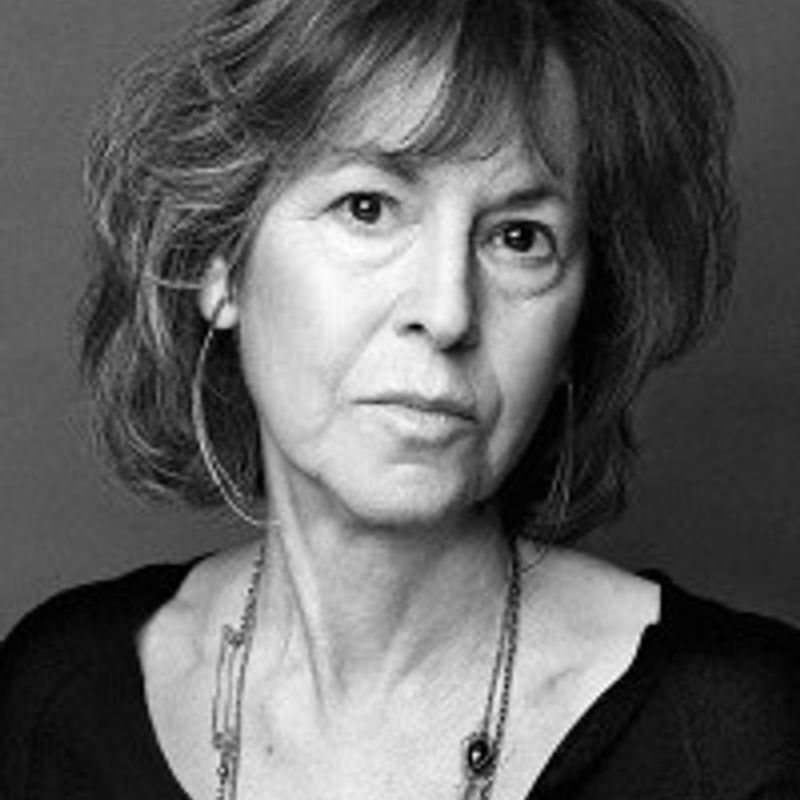
    Louise Glück é uma poeta americana cuja disposição para enfrentar o horrível, o difícil e o doloroso resultou em um corpo de trabalho caracterizado por discernimento e um lirismo severo. Seus prêmios literários e honrarias incluem o Prêmio Pulitzer, o National Book Award e recentemente o Prêmio Nobel de 2020. Sua primeira coletânea de poesia, <i>Firstborn</i> (1968), usou uma variedade de personas em primeira pessoa, todas insatisfeitas ou raivosas. O tom da coleção incomodou muitos críticos, mas a linguagem primorosamente controlada de Gluck e o uso imaginativo da rima e do medidor encantaram os outros. Embora sua perspectiva seja igualmente sombria, <i>The House on Marshland</i> (1975) mostra um maior domínio da voz. Lá, como em seus volumes posteriores, a persona de Glück incluía figuras históricas e míticas como Gretel e Joan of Arc. Os poemas de <i>The Triumph of Achilles</i> (1985), que ganhou o prêmio National Book Critics Circle, abordam temas arquetípicos do mito clássico, dos contos de fadas e da Bíblia. Essas preocupações também são evidentes em <i>Ararat</i> (1990), que tem sido aclamado por honestidade sincera em seu exame da família e do self. Os poemas em <i>The Wild Iris</i> (1992), que ganhou o Prêmio Pulitzer, abrangem os reinos natural, humano e espiritual, e estão unidos pelos temas universais do tempo e da mortalidade. <i>Averno</i> (2006) foi seu tratamento bem recebido do mito de Perséfone. <i>A Village Life</i> (2009) - sobre a existência em uma pequena cidade do Mediterrâneo - é escrita em um estilo profusamente descritivo que se afasta significativamente da parcimônia que caracterizava seu verso anterior. A coletânea <i>Poems 1962–2012</i> compilou todos os seus volumes publicados de poesia até 2012. Seu último trabalho poético, <i>Faithful and Virtuous Night</i> (2014), que trata da mortalidade e do silêncio noturno, foi aclamado pela crítica e recebeu o National Book Award em 2014. Publicou também <i>American Originality</i> (2017), uma coleção de seus ensaios escritos com o mesmo controle analítico e investigativo que distingue sua poesia.

    25 Livros
    12 Seguidores
    NY, EUA

    Louise Elisabeth Glück