The Jungle by Upton Sinclair, Fiction, Classics '-' The book depicts working class poverty, the lack of social supports, harsh and unpleasant living and working conditions and a hopelessness among many workers. These elements are contrasted with the deeply rooted corruption of people in power. A review by the writer Jack London called it, "the Uncle Tom's Cabin of wage slavery." This is the novel that Upton Sinclair used to show horrific practices in the meatpacking industry in the first part of the twentieth century. Like most of Sinclair, the book ultimately becomes a paen to socialism. But the man could write, whatever his politics were, and ewww!, the meatpackers were up to no damn good at all anyway. Highly recommended. ==== https://pt.wikipedia.org/wiki/The_Jungle http://www.discoveringhistory.org/1718-hh250-in-class/category/labor [About the Author] Upton Beall Sinclair Jr. (1878 - 1968) was an American writer who wrote nearly 100 books and other works in several genres. Sinclair's work was well-known and popular in the first half of the twentieth century and he won the Pulitzer Prize for Fiction in 1943. In 1906, Sinclair acquired particular fame for his classic muckraking novel The Jungle, which exposed conditions in the U.S. meat packing industry, causing a public uproar that contributed in part to the passage a few months later of the 1906 Pure Food and Drug Act and the Meat Inspection Act. In 1919, he published The Brass Check, a muckraking exposé of American journalism that publicized the issue of yellow journalism and the limitations of the "free press" in the United States. Four years after publication of The Brass Check, the first code of ethics for journalists was created. Time magazine called him "a man with every gift except humor and silence". He is also well remembered for the line: "It is difficult to get a man to understand something, when his salary depends upon his not understanding it." He used this line in speeches and the book about his campaign for governor as a way to explain why the editors and publishers of the major newspapers in California would not treat seriously his proposals for old age pensions and other progressive reforms. Upton Sinclair was considered a force of nature -- being not only prolific in his novel-writing but a political force of decided influence. Unknown to many of his admirers, Sinclair also wrote adventure fiction, under the name Ensign Clark Fitch, U.S.N.
The Jungle by Upton Sinclair, Fiction, Classics -
Upton Sinclair
Aegypan
2006
312 páginas
10h 24m
ISBN-13: 9781598183221
Edições (1)
Ver mais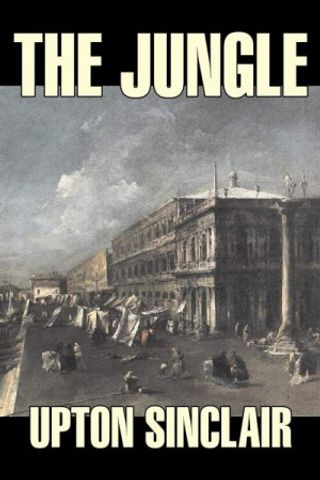
Estatísticas
Avaliações
0 / 0- 5 estrelas0%
- 4 estrelas0%
- 3 estrelas0%
- 2 estrelas0%
- 1 estrelas0%