Want to learn more fascinating history about the Museum of Natural History? In honor of its 150th anniversary, Colin Davey and Thomas A. Lesser have brought out a new, definitive history of the Museum. The book, The American Museum of Natural History and How it Got that Way, provides a history of the museum’s architecture, collections, exhibitions, research and conservation efforts, charting the institution’s relationship with the natural world, and with New York City. In these pages, you’ll find polar explorers, intrepid archeologists, and visionary rocket scientists who devoted their lives to discovery, and, in many cases, to the Museum itself. (Lucie Levine, 6sqft.com) The American Museum of Natural History is one of New York City’s most beloved institutions, and one of the largest, most celebrated museums in the world. Since 1869, generations of New Yorkers and tourists of all ages have been educated and entertained here. Located across from Central Park, the sprawling structure, spanning four city blocks, is a fascinating conglomeration of many buildings of diverse architectural styles built over a period of 150 years. The first book to tell the history of the museum from the point of view of these buildings, including the planned Gilder Center, The American Museum of Natural History and How It Got That Way contextualizes them within New York and American history and the history of science. Part II, “The Heavens in the Attic,” is the first detailed history of the Hayden Planetarium, from the museum’s earliest astronomy exhibits, to Clyde Fisher and the original planetarium, to Neil deGrasse Tyson and the Rose Center for Earth and Space, and it features a photographic tour through the original Hayden Planetarium. Author Colin Davey spent much of his childhood literally and figuratively lost in the museum’s labyrinthine hallways. The museum grew in fits and starts according to the vicissitudes of backroom deals, personal agendas, two world wars, the Great Depression, and the Cold War. Chronicling its evolution―from the selection of a desolate, rocky, hilly, swampy site, known as Manhattan Square to the present day―the book includes some of the most important and colorful characters in the city’s history, including the notoriously corrupt and powerful “Boss” Tweed, “Father of New York City” Andrew Haswell Green, and twentieth-century powerbroker and master builder Robert Moses; museum presidents Morris K. Jesup, Henry Fairfield Osborn, and Ellen Futter; and American presidents, polar and African explorers, dinosaur hunters, and German rocket scientists. Richly illustrated with period photos, The American Museum of Natural History and How It Got That Way is based on deep archival research and interviews.
The American Museum of Natural History and How It Got That Way -
Colin Davey
Edições (1)
Ver mais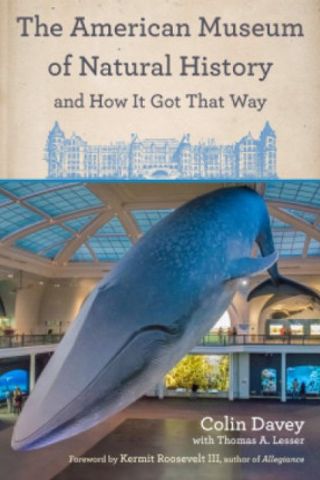
Não sou um grande fã de cidades grandes. Muito barulho, muita gente, muito... muito. Porém, meu apreço por museus de história natural é inversamente proporcional. Não foi surpreendente que, ao visitar a cidade de Nova Iorque, meu primeiro destino tenha sido o American Museum of Natural History. Desde que iniciei meus estudos nas Ciências Biológicas que tinha vontade de visitar o AMNH. A longa história, os ilustres cientistas que fizeram parte de seus quadros, grupos de pesquisa de ponta, e uma vasta coleção. Especialmente dinossauros. Por volta de 15 anos depois, realizei minha visita. Não pude ver tudo, o que é bom: há muito para se ver e aprender. Também garante um retorno. Além da curiosidade acerca das peças e dioramas, tive uma outra. Qual é a história do museu? Como foi que ele veio a ser o que é hoje? Com sorte, a maioria dos museus possui uma lojinha incluindo um monte de quinquilharias caríssimas, mas também sempre com algum livro com a história do museu. Talvez este aqui não seja a história definitiva, mas é certamente uma boa introdução. A primeira parte foca bastante na construção dos prédios, aquisição de materiais, e todo o jogo político envolvendo as somas de dinheiro, vontades e caprichos dos financiadores, e eventuais controvérsias. A segunda é um pouco mais dedicada aos prédios dedicados à Astronomia, contando a história do primeiro planetário, sua eventual demolição, e o segundo planetário que surge em seu lugar. Mencionei que o livro é uma boa introdução. Os tópicos gerais estão lá, mas o espaço não permite um mergulho muito profundo. Algumas controvérsias poderiam ser mais elaboradas, como o triste e abominável evento envolvendo os Inuit, indo da posse de meteoritos até os restos mortais de quatro pessoas. Vários membros estavam associados com teorias científicas já criticadas na época, especialmente o dito "racismo científico". Porém, vale dizer que não foram ignorados, não foi passado um pano, ou algo assim. É plenamente possível partir do livro para esses tópicos em outras obras. No fim, o AMNH tem uma história tão complexa e cativante como si mesmo, e o livro cumpre bem seu papel.
Estatísticas
Avaliações
5 / 1- 5 estrelas100%
- 4 estrelas0%
- 3 estrelas0%
- 2 estrelas0%
- 1 estrelas0%