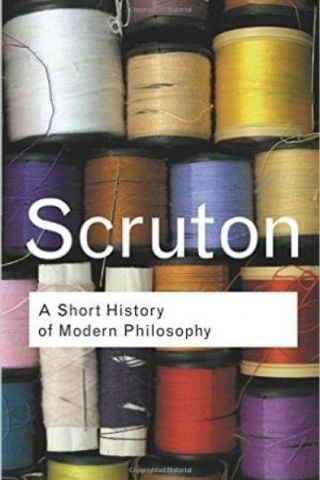
A Short History of Modern Philosophy - From Descartes to Wittgenstein

    Roger Scruton

    Routledge
    1981
    348 páginas
    11h 36m
    ISBN-13: 9780415267632

    Discover for yourself the pleasures of philosophy! Written both for the seasoned student of philosophy as well as the general reader, the renowned writer Roger Scruton provides a survey of modern philosophy. Always engaging, Scruton takes us on a fascinating tour of the subject, from founding father Descartes to the most important and famous philosopher of the twentieth century, Ludwig Wittgenstein. He identifies all the principal figures as well as outlines of the main intellectual preoccupations that have informed western philosophy. Painting a portrait of modern philosophy that is vivid and animated, Scruton introduces us to some of the greatest philosophical problems invented in this period and pursued ever since. Including material on recent debates, A Short History of Modern Philosophy is already established as the classic introduction. Read it and find out why.

    Edições (1)

    Ver mais
    • book cover

    Similares (4)

    Ver mais
    • book cover
    • book cover
    • book cover
    • book cover
    Resenhas (1)Ver mais
    Pedro LDC Viegas picture
    Pedro LDC Viegas29/12/2024Resenhou um livro
    4 (Muito bom)

    Introdução à Filosofia Moderna

    'Introdução à Filosofia Moderna' de Roger Scruton é uma obra acessível e erudita que explora o desenvolvimento da filosofia desde o Renascimento até o século XX. A obra é estruturada da seguinte forma: Parte 1: O Renascimento e a Crise da Autoridade (Cap. 1-3) - Humanismo e Renascimento. - A crise da autoridade religiosa. - Emergência da ciência moderna. Parte 2: O Racionalismo (Cap. 4-6) - Descartes e o método científico. - Spinoza e o panteísmo. - Leibniz e a teoria das mônadas. Parte 3: O Empirismo (Cap. 7-9) - Locke e a teoria do conhecimento. - Berkeley e o idealismo. - Hume e o ceticismo. Parte 4: A Filosofia Crítica (Cap. 10-12) - Kant e a Crítica da Razão Pura. - A síntese kantiana. - Implicações da filosofia crítica. Parte 5: O Idealismo Alemão (Cap. 13-15) - Fichte e o idealismo transcendental. - Hegel e a dialética. - Schelling e a filosofia da natureza. A obra aborda, entre outros, os seguintes temas: 1. Racionalismo versus Empirismo, o debate sobre a origem do conhecimento; 2. Dualismo mente-corpo, a relação entre mente e corpo; 3. Crítica da autoridade ou a crítica das instituições tradicionais; 4. Emergência da ciência moderna com Galileu, Newton e a Revolução Científica; 5. Idealismo alemão, com Fichte, Hegel e Schelling.

    8 curtidas

    Estatísticas

    Avaliações

    4 / 6
    • 5 estrelas17%
    • 4 estrelas67%
    • 3 estrelas17%
    • 2 estrelas0%
    • 1 estrelas0%