Proposed in 1992, during the United Nations Conference on Environment and Development (Rio de Janeiro), Agenda 21 became the contemporary paradigm to achieve "sustainable" development: balanced and more equalitarian economic growth, including the commitment with generations to come. Agenda 21 establishes the two concepts that human society decided, through the hands of the world leaders, to prioritize for current and future generations: I. poverty and environmental degradation generate instability; II. each country has to contribute for the achievement of sustainable growth, whether alone or will the cooperation of others. Brazilizan sugar cane agribusiness proposes answers to this challenge. Indeed, this sector helps to materialize new paradigmes of sustainable development, as shown in several processes: - creation of Brazilian sugar cane varieties resistant to pests and deseases (reducing the use of agrochemicals) - waste and residues recycling (increasing soil fertility without harmful effects on the environment) - clean and renewable energy generation - large-scale use of combustible ethanol, a fuel with fewer greenhouse gas and pollutants emissions, in comparison to fossil fuels Brazilian sugar cane agribusiness offers competitive resolutions to the increasing demand for food and renewable energy resources, without subsidies. The 2004/05 sugar cane crop in Brazil represents a quarter of the world's production. Around 50% of this raw material was converted into sugar, and the remaining share into fuel ethanol, at 320 industrial plants. Brazil is currently the world's largest sugar cane ethanol producer, the world's main exporter and also the main consumer. In these twelve studies, experts investigate the impact variables that the sugar cane agribusiness complex exerts on the environment, economy, and society. A broader view of these activities, subscribed by independent researchers, that leads to a transparent evaluation of the sector.
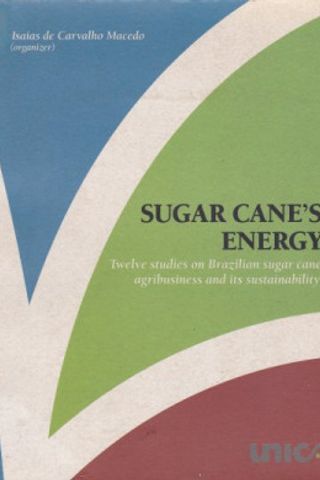
Sugar Cane's Energy - Twelve studies on Brasilian sugar cane agribusiness and its sustainability
Isaias de Carvalho Macedo, Adhair Ricci Junior, Alfred Szwarc, André Elia Neto, Carlos Afonso Nobre, Elimara Aparecida Assad Sallum, Enrico De Beni Arrigoni, Eugênio César Ulian, Gabriela Alves Macedo, Jayme Buarque de Hollanda, Jorge Luis Donzelli, Luiz Antonio Dias Paes, Luiz Carlos de Almeida, Luiz Gylvan Meira Filho, Márcia Azanha Ferraz Dias de Moraes, Marcos Guimarães de Andrade Landell, Marcos José Marques, Maria Luiza Barbosa, Marinez Ferreira de Siqueira, Rodolfo Hoffmann, Sérgio Antônio Veronez de Sousa, Vanderlei Perez Canhos, William Lee Burnquist
Berlendis & Vertecchia, UNICA - União da Agroindústria Canavieira do Estado de São Paulo
2007
243 páginas
8h 6m
ISBN-13: 9788586387944
Estatísticas
Avaliações
2.5 / 1- 5 estrelas0%
- 4 estrelas0%
- 3 estrelas100%
- 2 estrelas0%
- 1 estrelas0%