All human societies throughout history have given a special place to the arts. Even nomadic peoples who own scarcely any material possessions embellish what they do own, decorate their bodies, and celebrate special occasions with music, song, and dance. A fundamentally human appetite or need is being expressed--and met--by artistic activity. As Ellen Dissanayake argues in this stimulating and intellectually far-ranging book, only by discovering the natural origins of this human need of art will we truly know what art is, what it means, and what its future might be. Describing visual display, poetic language, song and dance, music, and dramatic performance as ways by which humans have universally, necessarily, and immemorially shaped and enhanced the things they care about, Dissanayake shows that aesthetic perception is not something that we learn or acquire for its own sake but is inherent in the reconciliation of culture and nature that has marked our evolution as humans. What "artists" do is an intensification and exaggeration of what "ordinary people" do, naturally and with enjoyment--as is evident in premodern societies, where artmaking is universally practiced. Dissanayake insists that aesthetic experience cannot be properly understood apart from the psychobiology of sense, feeling, and cognition--the ways we spontaneously and commonly think and behave. If homo aestheticus seems unrecognizable in today's modern and postmodern societies, it is so because "art" has been falsely set apart from life, while the reductive imperatives of an acquisitive and efficiency-oriented culture require us to ignore or devalue the aesthetic part of our nature. Dissanayake's original and provocativeapproach will stimulate new thinking in the current controversies regarding multi-cultural curricula and the role of art in education. Her ideas also have relevance to contemporary art and social theory and will be of interest to all who care strongly about the arts and their place in human, and humane, life.
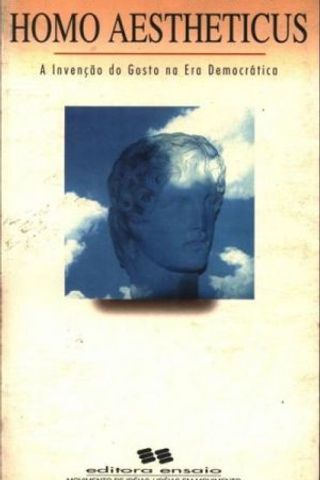
Homo Aestheticus - Where Art Comes From and Why
Ellen Dissanayake
University of Washington Press
1995
320 páginas
10h 40m
ISBN-10: 0295974796


Estatísticas
Avaliações
0 / 0- 5 estrelas0%
- 4 estrelas0%
- 3 estrelas0%
- 2 estrelas0%
- 1 estrelas0%
