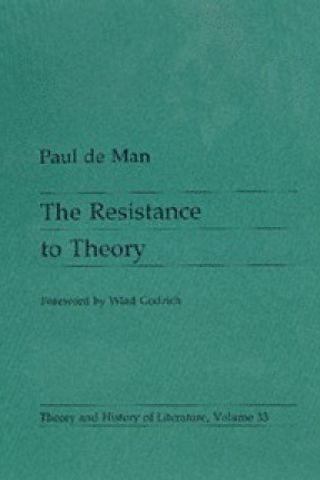
The title essay in this book does not engage in a debate with the polemical opponents of literary theory; to Paul de Man, the resistance to theory is inherent in the theoretical enterprise itself, and the real debate is with its own methodological assumptions and possibilities. The core of his argument in this essay (and in those that follow) lies in the old opposition between theoria and aesthesis - terms that embody, on the one hand, a linguistic, specifically rhetorical approach to literature and, on the other, a phenomenological, aesthetic, or hermeneutic approach - and all the implications those two modes carry with them. The resistance to theory, says de Man, is a resistance to the use of language about language; it is a resistance to reading, and a resistance to the rhetorical or figurative dimensions of language. The six related essays in The Resistance to Theory were written by de Man in the few years that preceded his death in December 1983. Undertaken to find out why the theoretical enterprise is blind to, or "resists," the radical nature of reading, the essays share not only a theme but also the pedagogical intent that is central to most of his work. These concerns, implicit in the title essay, are openly argued in "The Return to Philology." Each of the remaining essays is devoted to a specific theorist: Michael Riffaterre, Hans Robert Jauss, Walter Benjamin, and Mikhail Bakhtin. The Resistance to Theory also includes a 1983 interview with de Man conducted for Italian radio, and a complete bibliography of his work. Wlad Godzich's foreword tells how de Man's late work was conceived and organized for publication, and discusses some of the basic terms in his discourse. "Indispensable. . . . There is resistance to 'theory' and also confusion about its status with reference to both philosophy and criticism. De Man's defense of theory is subtle but uncompromising, and highly personal in its 'aporetic' conclusion." - Frank Kermode, Columbia University Paul de Man was Sterling Professor of Comparative Literature at Yale University. His books include Blindness and Insight (1971; revised edition, Minnesota, 1983), Allegories of Reading ( 1980), and The Rhetoric of Romanticism (1984).
The Resistance to Theory (Theory and History of Literature #33) -
Paul de Man
University of Minnesota Press
1986
137 páginas
4h 34m
ISBN-10: 0816612935

Estatísticas
Avaliações
5 / 1- 5 estrelas100%
- 4 estrelas0%
- 3 estrelas0%
- 2 estrelas0%
- 1 estrelas0%
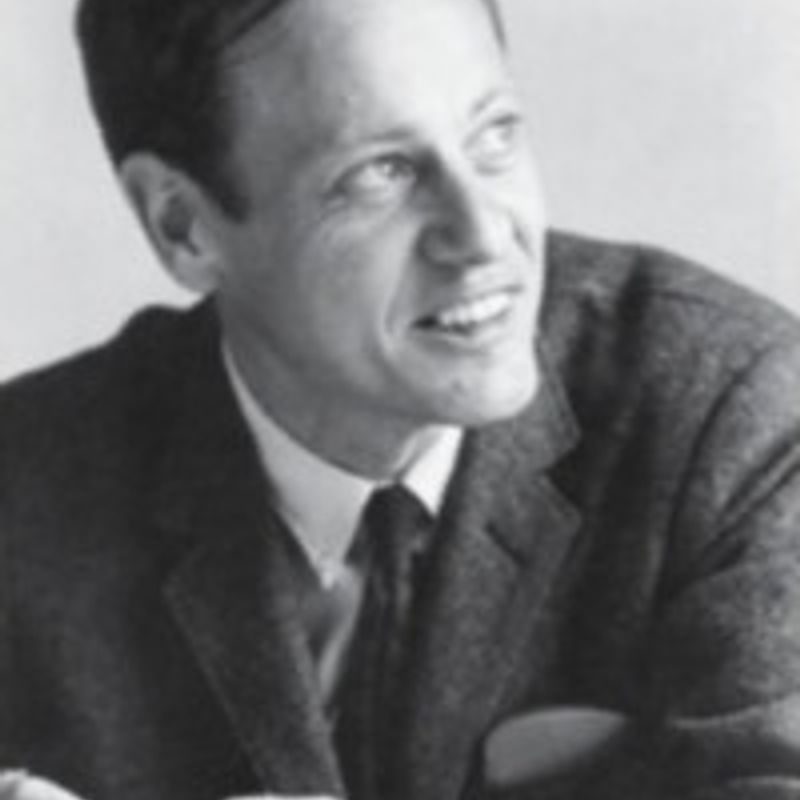
Paul de Man
Paul de Man (6 de dezembro de 1919, Antuérpia, Bélgica - 21 de dezembro de 1983, New Haven, EUA) foi um teórico belga-estadunidense da literatura e da retórica. Amigo de Jacques Derrida, é considerado importante na difusão da desconstrução nos EUA. Defendia uma crítica atenta aos procedimentos figurativos dos textos e principalmente às contradições latentes nessas figurações. Seu trabalho examina a problemática da leitura no interior do texto, observando como ele simultaneamente afirma e nega suas premissas e integridade. Poucos anos após seu falecimento, veio a público que de Man havia publicado, durante a guerra, dezenas de artigos para um periódico colaboracionista em sua terra natal. Apesar de muitos serem comentários inocentes de apresentações artísticas, destacam-se um de teor antissemita e outro favorável aos invasores alemães. Isso alimentou uma revisão radical de seu trabalho e de sua imagem. Sabe-se também que, antes da invasão alemã à Bélgica, ele havia trabalhado em uma publicação estudantil democrática e antifascista, o Cahiers du Libre Examen, forçosamente interrompido pelos nazistas. As discussões em torno de seu legado, biografia e publicações de juventude duram até hoje, por vezes obscurecendo seu trabalho de maturidade. Após a guerra, de Man imigrou para os EUA, onde obteve sua pós-graduação, nos anos 1950, pela Universidade Harvard em Literatura Comparada com uma tese sobre Mallarmé, Yeats e Stefan George. Nos anos 1960, lecionou nas Universidades de Cornell, Johns Hopkins e Zurique. Dos anos 1970 e até seu falecimento em 1983, foi chefe dos departamentos de Francês, Literatura Comparada e Humanidades da Yale, onde se destaca como figura central da Escola de Yale de Crítica Literária ao lado de figuras como Jacques Derrida, J. Hillis Miller, Geoffrey Hartman e Harold Bloom. Além disso, também orientou teses como a de Gayatri Spivak e Barbara Johnson.
6 Livros
2 Seguidores
Flandres, Bélgica