Entrar
    Book cover
    Compartilhar
    Editar
    • Sinopse
    • Edições2
    • Vídeos0
    • Grupos0
    • Resenhas3
    • Leitores55
    • Similares5
    Skoob logo

    Saiba mais

    Quem somosTermos de usoFale conoscoCentral de ajudaPrivacidade

    Fique por dentro

    Livros em destaque

    Explore

    LivrosAutoresEditorasLeitoresCortesias

    Siga nas redes sociais

    Baixe o app

    Google PlayApp Store

    Averno -

    Louise Glück

    Farrar, Straus and Giroux
    2007
    96 páginas
    3h 12m
    ISBN-10: 0374530742
    3.9
    22 avaliações
    Leram37Lendo0Querem18Relendo0Abandonos0Resenhas3
    Favoritos7Desejados18Avaliaram22

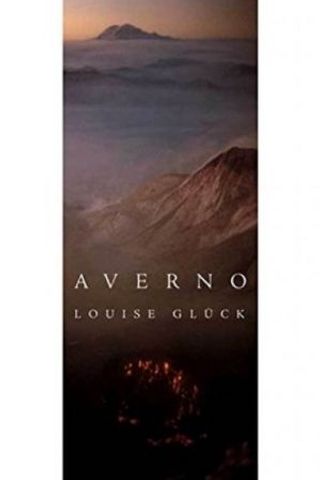
    Averno is a small crater lake in southern Italy, regarded by the ancient Romans as the entrance to the underworld. That place gives its name to Louise Glück's tenth collection: in a landscape turned irretrievably to winter, it is a gate or passageway that invites traffic between worlds while at the same time resisting their reconciliation. Averno is an extended lamentation, its long, restless poems no less spellbinding for being without conventional resoltution or consolation, no less ravishing for being savage, grief-stricken. What Averno provides is not a map to a point of arrival or departure, but a diagram of where we are, the harrowing, enduring present.
    Edições (2)

    Ver mais
    • book cover
    • book cover

    Similares (5)

    Ver mais
    • book cover
    • book cover
    • book cover
    • book cover
    • book cover
    Resenhas (3)Ver mais
    @psi.adriana.scarpin picture
    @psi.adriana.scarpin19/10/2020Resenhou um livro
    4 (Muito bom)

    Persephone the Wanderer

    "In the first version, Persephone is taken from her mother and the goddess of the earth punishes the earth—this is consistent with what we known of human behavior, that human beings take profound satisfaction in doing harm, particularly unconscious harm: we may call this negative creation. Persephone’s initial sojourn in hell continues to be pawed over by scholars who dispute the sensations of the virgin: did she cooperate in her rape, or was she drugged, violated against her will, as happens so often now to modern girls. As is well known, the return of the beloved does not correct the loss of the beloved: Persephone returns home stained with red juice like a character in Hawthorne— I am not certain I will keep this word: is earth ”home” to Persephone? Is she at home, conceivable, in the bed of the god? Is she at home nowhere? Is she a born wanderer, in other words an existential replica of her own mother, less hamstrung by ideas of causality? You are allowed to like no one, you know. The characters are not people. They are aspects of a dilemma or conflict. Three parts: just as the soul is divided, ego, superego, id. Likewise the three levels of the known world, a kind of diagram that separates heaven from earth from hell. You must ask yourself: where is it snowing? White of forgetfulness, of desecration— It is snowing on earth; the cold wind says Persephone is having sex in hell. Unlike the rest of us, she doesn’t know what winter is, only that she is what causes it. She is lying in the bed of Hades. What is in her mind? Is she afraid? Has something blotted out the idea of mind? She does know the earth is run by mothers, this much is certain. She also knows she is not what is called a girl any longer. Regarding incarceration, she believes she has been a prisoner since she has been a daughter. The terrible reunions in store for her will take up the rest of her life. When the passion for expiation is chronic, fierce, you do not choose the way you live. You do not live; you are not allowed to die. You drift between earth and death which seem, finally, strangely alike. Scholars tell us that there is no point in knowing what you want when the forces contending over you could kill you. White of forgetfulness, white of safety— They say there is a rift in the human soul which was not constructed to belong entirely to life. Earth Asks us to deny this rift, a threat disguised as suggestion— As we have seen in the tale of Persephone which should be read As an argument between the mother and the lover— the daughter is just meat. When death confronts her, she has never seen the meadow without the daisies. Suddenly she is no longer singing her maidenly songs. about her mother’s beauty and fecundity. Where the rift is, the break is. Song of the earth, song of the mystic vision of eternal life— My soul shattered with the strain of trying to belong to earth— What will you do, when it is your turn in the field with the god? #################################### In the second version, Persephone is dead. She dies, her mother grieves — problems of sexuality need not trouble us here. Compulsively, in grief, Demeter circles the earth. We don’t expect to know what Persephone is doing. She is dead, the dead are mysteries. We have here a mother and a cipher: this is accurate to the experience of the mother as she looks into the infant’s face. She thinks: I remember when you didn’t exist. The infant is puzzled; later, the child’s opinion is she has always existed, just as her mother has always existed in her present form. Her mother is like a figure at a bus stop, an audience for the bus’s arrival. Before that, she was the bus, a temporary home or convenience. Persephone, protected, stares out the window of the chariot. What does she see? A morning in early spring, in April. Now her whole life is beginning — unfortunately, it’s going to be a short life. She’s going to know, really, only two adults: death and her mother. But two is twice what her mother has: her mother has one child, a daughter. As a god, she could have had a thousand children. We begin to see here the deep violence of the earth whose hostility suggests she has no wish to continue as a source of life. And why is this hypothesis never discussed? Because it is not in the story; it only creates the story. In grief, after the daughter dies, the mother wanders the earth. She is preparing her case; like a politician she remembers everything and admits nothing. For example, her daughter’s birth was unbearable, her beauty was unbearable: she remembers this. She remembers Persephone’s innocence, her tenderness — What is she planning, seeking her daughter? She is issuing a warning whose implicit message is: what are you doing outside my body? You ask yourself: why is the mother’s body safe? The answer is this is the wrong question, since the daughter’s body doesn’t exist, except as a branch of the mother’s body that needs to be reattached at any cost. When a god grieves it means destroying others (as in war) while at the same time petitioning to reverse agreements (as in war also): if Zeus will get her back, winter will end. Winter will end, spring will return. The small pestering breezes that I so loved, the idiot yellow flowers — Spring will return, a dream based on a falsehood: that the dead return. Persephone was used to death. Now over and over her mother hauls her out again — You must ask yourself: are the flowers real? If Persephone “returns” there will be one of two reasons: either she was not dead or she is being used to support a fiction — I think I can remember being dead. Many times, in winter, I approached Zeus. Tell me, I would ask him, how can I endure the earth? And he would say, in a short time you will be here again. And in the time between you will forget everything: those fields of ice will be the meadows of Elysium."

    7 curtidas

    Estatísticas

    Avaliações

    3.9 / 22
    • 5 estrelas45%
    • 4 estrelas23%
    • 3 estrelas23%
    • 2 estrelas5%
    • 1 estrelas5%
    Louise Elisabeth Glück profile picture

    Louise Elisabeth Glück

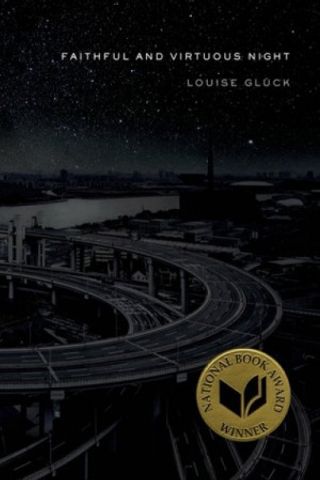
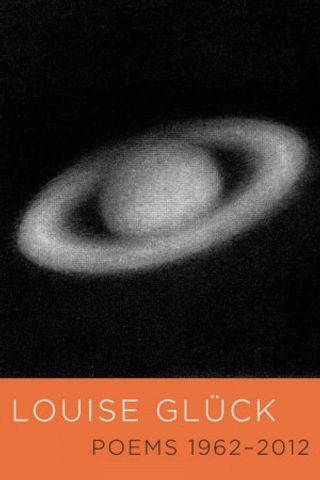
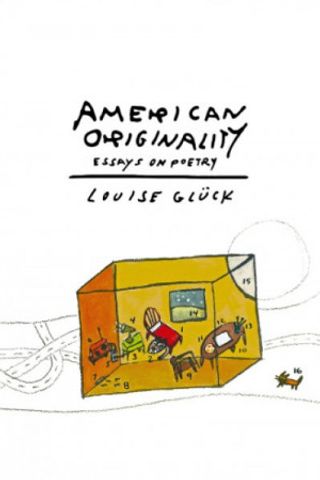
    Louise Glück é uma poeta americana cuja disposição para enfrentar o horrível, o difícil e o doloroso resultou em um corpo de trabalho caracterizado por discernimento e um lirismo severo. Seus prêmios literários e honrarias incluem o Prêmio Pulitzer, o National Book Award e recentemente o Prêmio Nobel de 2020. Sua primeira coletânea de poesia, <i>Firstborn</i> (1968), usou uma variedade de personas em primeira pessoa, todas insatisfeitas ou raivosas. O tom da coleção incomodou muitos críticos, mas a linguagem primorosamente controlada de Gluck e o uso imaginativo da rima e do medidor encantaram os outros. Embora sua perspectiva seja igualmente sombria, <i>The House on Marshland</i> (1975) mostra um maior domínio da voz. Lá, como em seus volumes posteriores, a persona de Glück incluía figuras históricas e míticas como Gretel e Joan of Arc. Os poemas de <i>The Triumph of Achilles</i> (1985), que ganhou o prêmio National Book Critics Circle, abordam temas arquetípicos do mito clássico, dos contos de fadas e da Bíblia. Essas preocupações também são evidentes em <i>Ararat</i> (1990), que tem sido aclamado por honestidade sincera em seu exame da família e do self. Os poemas em <i>The Wild Iris</i> (1992), que ganhou o Prêmio Pulitzer, abrangem os reinos natural, humano e espiritual, e estão unidos pelos temas universais do tempo e da mortalidade. <i>Averno</i> (2006) foi seu tratamento bem recebido do mito de Perséfone. <i>A Village Life</i> (2009) - sobre a existência em uma pequena cidade do Mediterrâneo - é escrita em um estilo profusamente descritivo que se afasta significativamente da parcimônia que caracterizava seu verso anterior. A coletânea <i>Poems 1962–2012</i> compilou todos os seus volumes publicados de poesia até 2012. Seu último trabalho poético, <i>Faithful and Virtuous Night</i> (2014), que trata da mortalidade e do silêncio noturno, foi aclamado pela crítica e recebeu o National Book Award em 2014. Publicou também <i>American Originality</i> (2017), uma coleção de seus ensaios escritos com o mesmo controle analítico e investigativo que distingue sua poesia.

    25 Livros
    12 Seguidores
    NY, EUA

    Louise Elisabeth Glück