"The Mysteries of Paris" by Eugène Sue / Foreword by Peter Brooks. Translated by Carolyn Betensky and Jonathan Loesberg. The first new translation in over a century of the the brilliant epic novel that inspired 'Les Misérables'. From July 1842 through October 1843, Parisians rushed to the newspaper each week for the latest installment of Eugène Sue's The Mysteries of Paris, one of France's first serial novels. The suspenseful story of Rodolphe, a magnetic hero of noble heart and shadowy origins, played out over ninety issues, garnering wild popularity and leading many to call it the most widely read novel of the 19th century. Sue's novel created the city mystery genre and inspired a raft of successors, including Les Misérables and The Count of Monte Cristo. The intricate melodrama of The Mysteries of Paris unfolds around a Paris where the fortunes of the rich and the poor are helplessly tangled, despite the vast gulf between them. In the Cité, a seedy neighborhood where criminals gather, Rodolphe encounters a young prostitute of breathtaking purity who goes by the name Songbird. He saves her from an attack by a ruffian called the Slasher, setting off the dominoes of an epic narrative traversing the ranks of French society. As Rodolphe pursues his own mysterious quest for redemption, a circle of characters from all walks of life forms around him-some following his every move and others gravitating to his boundless generosity. From the nefarious pairing of the Schoolmaster and the Owl, a hardened criminal and an unfathomably cruel street merchant, to Morel, a gem-cutter so virtuous he refuses to steal even the smallest ruby to feed his starving family, the lines between good and evil in Sue's Paris are always clear, but never unyielding. Though the immense literary and historical resonance of Sue's magnum opus has been for years overshadowed by Hugo's achievement, this stunning new translation is a revelation, promising to bring the unmitigated pleasures of Sue's cliffhangers and criminals to a new century of readers. Sensational, steamy, tightly-plotted, pulpy, proto-socialist, heartbreaking, and riveting, The Mysteries of Paris is doubtless one of the most entertaining and influential works to emerge from the 19th century. ==== [PRAISE] “Sue’s The Mysteries of Paris not only influenced Les Miserables, it also gave rise to a subgenre of Gothicky novels about the dark underside of big cities, including London, New Orleans and Philadelphia (George Lippard’s notorious The Quaker City). Aristocrats with secrets, a prostitute with a heart of gold, criminals nicknamed the Schoolmaster and the She-Wolf, an evil lawyer, thwarted love, blackmail and conspiracy — this is a sprawling novel that packs in everything and then adds more.” -Michael Dirda, The Washington Post “One might not think that a gargantuan Parisian novel, published in 150 newspaper episodes in the middle of the 19th century, would fill anyone’s 21st-century bill as an absolute ripsnorter – but Eugène Sue’s The Mysteries of Paris does exactly that… Few books are more earnest, and few read so fresh, so gloriously now. Part of that freshness comes down to the laurel-winning translation by Carolyn Betensky and Jonathan Loesberg… Even a bibliographic-centric Schoolmaster will not find for you a better novel in this annum, or most others.” -The Philadelphia Inquirer “[Sue] remains a literary hero to both dissidents and boulevardiers. Despite his relative obscurity outside France, this new translation of what is undoubtedly his crowning literary achievement should go some way to introducing the great serialist to the English-speaking world.” –The Times Literary Supplement ==== [ABOUT THE AUTHOR]: Eugène Sue (1804–1857) was a French novelist. In addition to The Mysteries of Paris, his works include The Wandering Jew, an anticlerical melodrama, and The Mysteries of the People, a fictionalized history of the working classes throughout French history. In 1850, Sue won election to the National Assembly as a Socialist delegate. ==== https://www.penguinrandomhouse.com/authors/233035/eugene-sue/ https://en.m.wikipedia.org/wiki/Eugène_Sue https://en.m.wikipedia.org/wiki/The_Mysteries_of_Paris
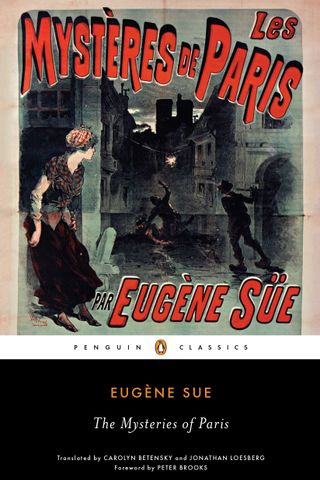
The Mysteries of Paris (Penguin Classics) - Les Mystères de Paris
Eugène Sue
Penguin Random House
2015
1392 páginas
1d 22h 24m
ISBN-13: 9780143107125
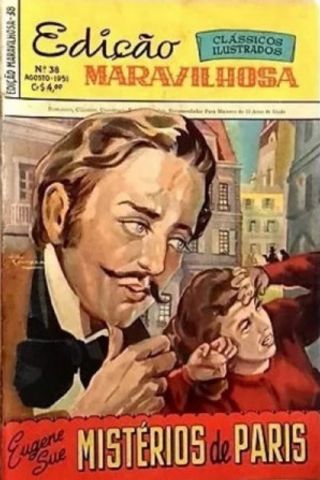


Estatísticas
Avaliações
5 / 1- 5 estrelas100%
- 4 estrelas0%
- 3 estrelas0%
- 2 estrelas0%
- 1 estrelas0%

Eugène Sue
Eugène Sue nasceu em Paris, na França, em 26 de janeiro de 1804, filho de um distinto cirurgião da Armada Francesa, afilhado de Eugène de Beauharnais e de Josephine de Beauharnais, a futura imperatriz Josephine Bonaparte. Seu pai levou-o para ser aprendiz de cirurgião na Espanha durante a expedição dos Cem mil filhos de São Luis, pela Grécia, em plena guerra da independência e estando Sue na Batalha de Navarino e nas Antilhas. Aos 26 anos recebeu a herança de seu pai e, por ser elegante e sedutor, se tornou amante de muitas mulheres de Paris, ganhando o apelido de Beau Sue. Acabou com a fortuna deixada por seu pai em sete anos e passou a escrever para sobreviver. Depois da Revolução de 1848, obteve um assento na Asembleia em abril de 1850. Em 1851 se pronunciou contra o golpe de estado dado por Napoleão III, o que resultou em seu exílio na França. Este exílio estimulou sua produção literária, contudo, a qualidade era inferior à de suas obras anteriores. Finalmente, morre em Annecy (Sabóia), em 1857. Obras mais importantes: "Les mystères de Paris" (1842), "Le juif errant" (1845), "Les mystères du Peuple" (1849), dentre outras. Fonte: Wikipédia http://pt.wikipedia.org/wiki/Eug%C3%A8ne_Sue
3 Livros
2 Seguidores