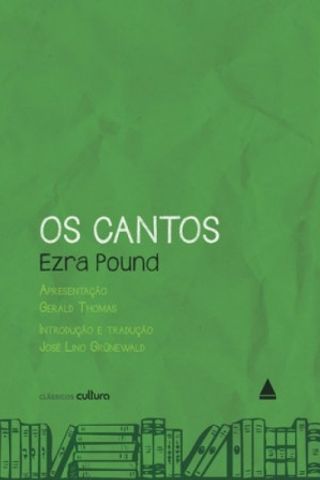
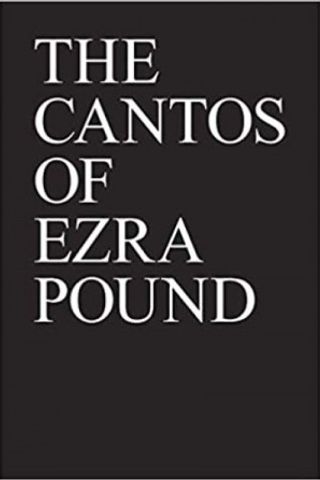
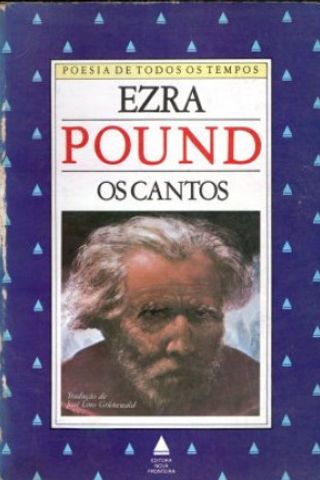
The Cantos by Ezra Pound is a long, incomplete poem in 116 sections, each of which is a canto. Most of it was written between 1915 and 1962, although much of the early work was abandoned and the early cantos, as finally published, date from 1922 onwards. It is a book-length work, widely considered to be an intense and challenging read. The Cantos is generally considered one of the most significant works of modernist poetry in the 20th century. As in Pound's prose writing, the themes of economics, governance and culture are integral to the work's content. The most striking feature of the text, to a casual browser, is the inclusion of Chinese characters as well as quotations in European languages other than English. A close reader will normally require a scholarly commentary to help understand the text. The range of allusion to historical events is broad, and abrupt changes occur with little transition. There is also wide geographical reference. Pound added to his earlier interests in the classical Mediterranean culture and East Asia selective topics from medieval and early modern Italy and Provence, the beginnings of the United States, England of the 17th century, and details from Africa he had obtained from Leo Frobenius. Many references in the text lack explanation. Pound initially believed that he possessed poetic and rhetorical techniques which would themselves generate significance, but as time passed he became more concerned with the messages he wished to convey. The section he wrote at the end of World War II, begun while he was interned in American-occupied Italy, has become known as The Pisan Cantos. It was awarded the first Bollingen Prize in 1948. There were many repercussions, since this in effect honoured a poet who was under indictment for treason. ::: Delmore Schwartz said about The Cantos, "They are one of the touchstones of modern poetry." William Carlos Williams said, "[Pound] discloses history by its odor, by the feel of it—in the words; fuses it with the words, present and past, to MAKE his Cantos. Make them." Since the 1969 revised edition, the Italian Cantos LXXII and LXXIII (as well as a 1966 fragment concluding the work) have been added. Now appearing for the first time is Pound's recently found English translation of Italian Canto LXXII.
The Cantos -
Ezra Pound
New Directions Publishing Corporation
1996
896 páginas
1d 5h 52m
ISBN-13: 9781463560041
Resenhas (4)Ver mais

Fabio Riggi14/10/2020Resenhou um livro
15 curtidas
Estatísticas
Avaliações
3.9 / 68- 5 estrelas35%
- 4 estrelas35%
- 3 estrelas21%
- 2 estrelas4%
- 1 estrelas4%